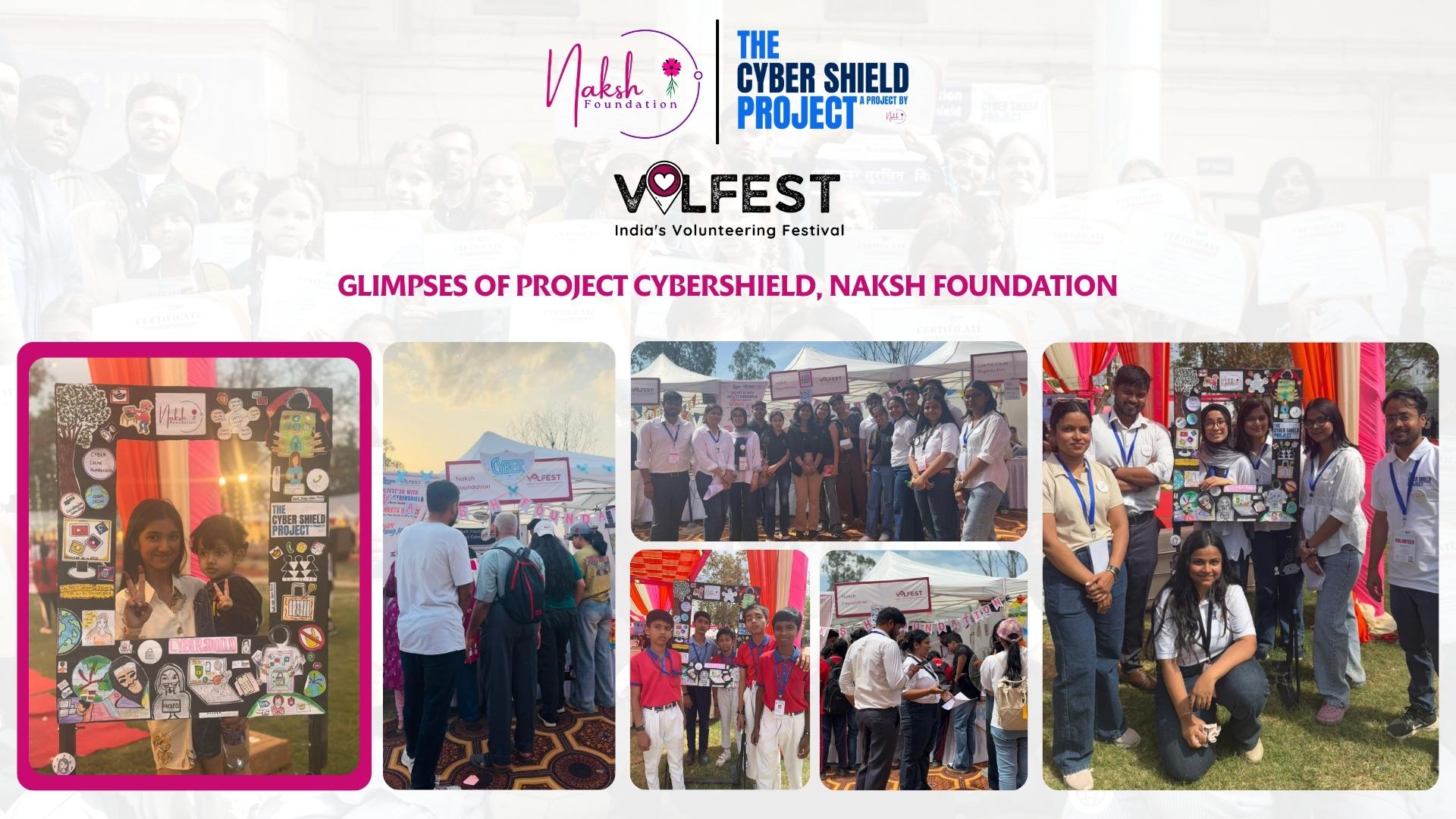
VolFest’26, organized by Humans of Volunteering as part of Good Deeds Day, was held at Baansera Park, Delhi on 28th and 29th March. The event brought together NGOs and citizen groups working across sectors, creating a space for meaningful engagement with the public.
Project CyberShield, an initiative of Naksh Foundation, participated with a focused goal: to deliver practical, ground-level cybercrime awareness to everyday internet users. Cybercrime is no longer limited to technical users or rare cases. It affects students, working professionals, and families alike. Scammers today rely on human behavior more than technology. This makes awareness the first and most effective line of defence. At VolFest 2026, the CyberShield team worked to simplify this understanding for the general public.
Direct Public Engagement during VolFest’26: Making Cyber Risks Understandable
Instead of formal lectures, the team interacted directly with citizens visiting the stall. Conversations were built around real-life situations that people could immediately relate to.
Key cyber threats explained included:
- Phishing Scams: Fake links and messages designed to steal personal data
- Vishing Calls: Fraud calls creating panic to extract sensitive information
- Digital Arrest Scams: Impersonation of authorities to threaten victims
- Social Media Frauds: Fake profiles and manipulated interactions
- Social engineering: A manipulation technique that exploits human psychology and error
- Privacy settings: Tools within websites, apps, and devices that allow users to control who can view their personal information, activity, and profile.
- Understanding VPN (Virtual Private Network): A security technology that creates an encrypted, private tunnel between your device and the internet.
- Risks of Public Wi-Fi: Hackers steal personal data, banking credentials, and, at times, deliver malicious software to connected devices.
- Multi-Factor Authentication (MFA): A security framework requiring users to verify their identity with two or more independent credentials before accessing accounts.
- Reporting Mechanism: helpline number 1930 & cybercrime.gov.in
The approach was clear help people identify patterns, not just definitions.
Interactive Games for Cyber Awareness
One of the most effective strategies used at the stall was game based learning. Visitors participated in simple, scenario-based games that reflected real cybercrime situations. While playing, they were guided through decision-making moments, whether to click a link, trust a caller, or share information.
Impact of This Approach VolFest’26 :
- Increased engagement and curiosity
- Better understanding of cyber risks
- Stronger recall through practical experience
This method ensured that awareness was not passive. People learned by doing.
Nukkad Natak: Street Play on Cybercrime Awareness
A major highlight of the event was the Nukkad Natak performed by the CyberShield team. The street play showcased real-world cybercrime scenarios, including phishing, vishing, digital arrest scams, and frauds through social media. It demonstrated how scammers manipulate emotions such as fear and urgency to control victims.
Key Takeaways from the Performance at VolFest’26 :
- Understanding how scams unfold step by step
- Identifying early warning signs
- Knowing the correct reporting mechanisms
This format made complex issues accessible and memorable for a diverse audience.
Volunteers Behind the Initiative
The success of CyberShield’s participation was driven by a committed team of volunteers who ensured both engagement and impact on the ground. The team was led by Divya Mehra and Ranjeet Kumar, with Samuel and Jay Kishan serving as the team coordinator. They were actively supported by volunteers Harsha & Abhishek raj.
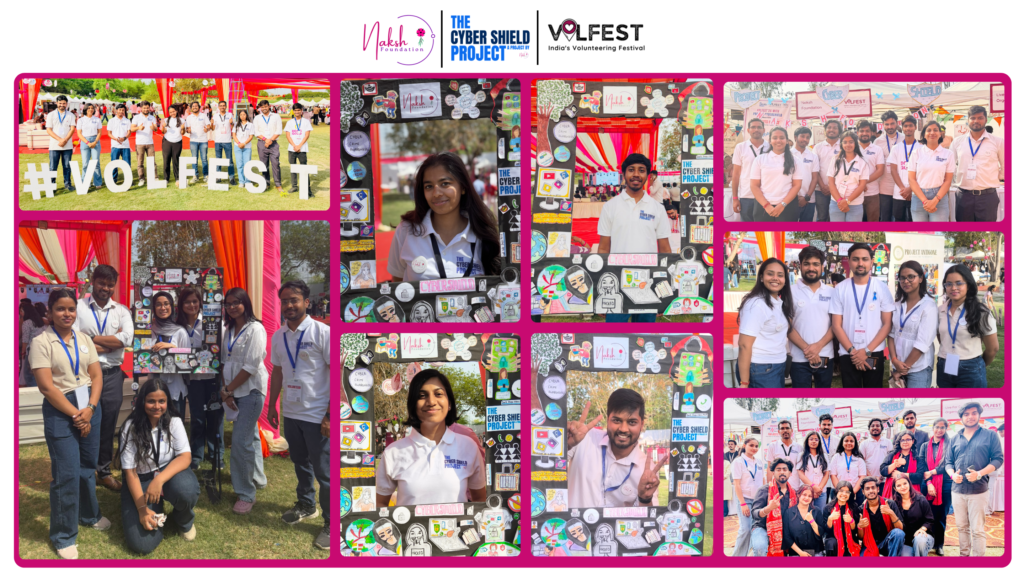
Other volunteers participated during the event are Noorish, Divya Chauhan, Anjali Rai, Aryan, Chandan Kumar, Priya, Manisha, Ambuj, Mishab, Kumkum, and Sundaram whose collective efforts played a key role in effectively reaching and educating participants during the event.
Their role ensured consistent engagement and effective communication with every visitor.
Key Outcomes of CyberShield at VolFest 2026
- Direct engagement with a diverse public audience
- Increased awareness of common cybercrime techniques
- Improved understanding of preventive digital practices
- Strong recall through interactive and performance-based learning
The Road Ahead
The experience at VolFest 2026 reinforced a critical insight cyber awareness must move beyond structured sessions and reach people in their everyday environments. Project CyberShield will continue expanding its outreach through on-ground activities, institutional collaborations, and community engagement programs.
Conclusion
Cybercrime is evolving rapidly, but awareness can evolve faster. Initiatives like Project CyberShield demonstrate that when awareness is practical, interactive, and accessible, it creates real impact. VolFest 2026 was not just an event, it was a step toward building a more informed and cyber-secure community.