Introduction to Digital Identity Protection
Our digital identity includes the accounts, details, and information we use every day. We use our phones for banking, shopping, social media, and communication. However, cybercriminals can target this information through phishing, weak passwords, and online scams. As a result, one careless click can put an account or personal information at risk. Therefore, learning about digital identity protection can help people make safer choices and protect their privacy.
About the Digital Identity Protection Session
Session Title: Advanced Digital Identity & Privacy Protection
Date: 28 July 2026
Time: 7:00 PM IST
Mode: Online (Zoom)
Series: CyberShakti Cohort 2, Day 2
Organised by: Project CyberShield
About the Guest Speaker
Mr. Prabhakar Damour, a PhD candidate at IIIT Vadodara and Director of NewNow Pvt. Ltd., led the session. He shared practical tips and real-world cases with the participants. In addition, he explained how simple security habits can help prevent serious cyber incidents.
Why Digital Identity Protection Matters
Your digital identity can include your email accounts, bank details, social media profiles, and personal documents. Today, attackers use different methods to steal this information. For example, they may use identity theft, SIM swap attacks, phishing, or data leaks. Because of this, internet users need to take simple steps to protect their identity and privacy. With the right habits, people can reduce their risk and stay safer online.
Key Digital Identity Protection Topics
Strong Passwords and Digital Hygiene
Participants learned how to create strong and unique passwords. They also learned why they should avoid using the same password for different accounts.
SIM Swap and Biometric Security
In addition, the speaker explained how SIM swap attacks can put personal accounts at risk. He also highlighted the importance of locking Aadhaar biometrics to help prevent unauthorised use.
Email and Privacy Protection
The speaker shared real cybercrime cases to show how quickly online fraud can affect people. For example, victims of financial cyber fraud can report the incident through the 1930 Cyber Helpline. As a result, quick reporting can help victims seek support at the right time.
Real-Life Cybercrime Cases
Real cases showed why quick action matters after online fraud. For example, victims can report financial cybercrime through the 1930 Cyber Helpline to seek timely help.
Multi-Factor Authentication
The session also highlighted the importance of Multi-Factor Authentication (MFA). By enabling MFA, users can add another layer of security to important accounts. Therefore, even if someone gets a password, accessing the account becomes more difficult.
Audience Interaction During the Digital Identity Protection Session
The session included practical examples, discussions, and questions from participants. During the discussion, participants asked about protecting social media accounts, bank accounts, and personal information. They also explored simple ways to improve their online privacy. As a result, the interaction helped participants connect cybersecurity practices with situations they may face in everyday life.
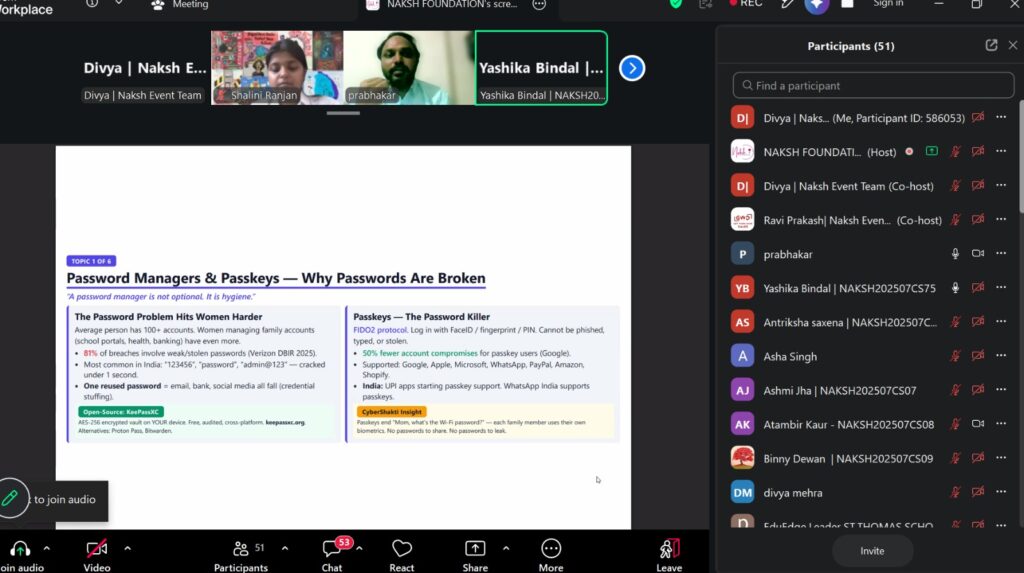
Watch the Full Digital Identity Protection Session
The complete session is available on Naksh Foundation’s YouTube channel. There, viewers can revisit the expert discussion and learn practical ways to protect their digital identity, improve online privacy, and stay safe from cyber threats.
Important Digital Identity Protection Takeaways
- First, use a strong and unique password for every account.
- Next, enable Multi-Factor Authentication wherever possible.
- Also, keep banking and personal email accounts separate.
- In addition, lock Aadhaar biometrics for added protection.
- Finally, report cyber fraud quickly through the 1930 Cyber Helpline.
Building Safer Digital Habits
Protecting your digital identity starts with simple actions. For example, strong passwords, MFA, privacy checks, and quick reporting can help reduce online risks. Over time, these habits can make digital accounts safer. Ultimately, small security steps can help people use digital services with greater confidence.
Want to explore more cybersecurity awareness activities? Visit our Blogs to discover more campaigns and events. You can also visit our Naksh Foundation to learn about all the initiatives we undertake.