Introduction to Cyber Fraud
Every day, people receive fake calls, suspicious emails, unknown links, and false payment requests. However, many scams look real and can easily confuse users. Cybercriminals also use AI voice scams, fake websites, and other tricks to gain trust. Therefore, learning about cyber fraud can help people spot warning signs and make safer choices online.
About the Cyber Fraud Session
Date: 1 August 2026
Time: 7:00 PM
Mode: Online
Topic: Cyber Fraud Awareness
Organised by: Project CyberShield
About the Guest Speaker
Ms. Ananya Hada, Master Trainer at Project CyberShield, led the session. She shared practical examples and live demonstrations to explain common cyber threats. Moreover, her simple approach helped beginners and regular internet users understand how to stay safe online.
Why Cyber Fraud Matters
Cyber threats can affect anyone who uses a smartphone, social media, online banking, or digital payments. For example, scammers may use fake UPI screenshots, phishing emails, AI voice cloning, or SIM-related fraud. As a result, one careless action can lead to financial loss or privacy risks. Therefore, awareness remains an important part of digital safety.
Key Cyber Fraud Topics
Identifying Phishing Scams
Participants learned how to check sender details, suspicious links, spelling errors, and urgent messages. In addition, they were advised to verify websites before entering passwords or personal information.
SIM Safety and AI Voice Scams
The speaker demonstrated how the Sanchar Saathi portal can help users check registered SIM cards and report suspicious numbers. Meanwhile, the session explained AI voice scams and why users should verify urgent calls through trusted contacts.
Strong Passwords and Account Security
Participants learned to create strong and unique passwords. Moreover, the session covered password managers and Multi-Factor Authentication. These extra steps can make accounts harder for scammers to access.
Financial Fraud and Cybercrime Reporting
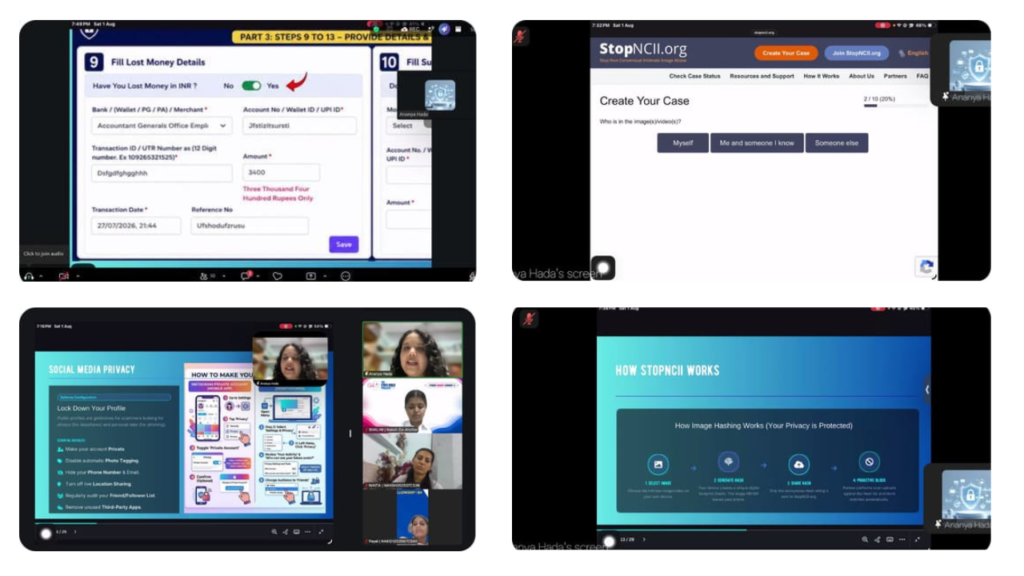
The workshop used fake UPI payment screenshots to explain common payment scams. Therefore, participants were reminded to check their bank records instead of trusting screenshots. In addition, they learned to preserve evidence and report cybercrime through official channels.
Important Cyber Fraud Safety Tips
- First, verify suspicious emails, links, and websites.
- Next, use strong passwords and enable Multi-Factor Authentication.
- Also, avoid sharing unnecessary personal information online.
- In addition, check your bank account before trusting payment screenshots.
- Finally, preserve evidence and report cyber fraud quickly.
Audience Interaction During the Cyber Fraud Session
The session included live demonstrations, practical examples, and interactive discussions. Moreover, participants asked questions about phishing, online payments, SIM safety, and AI voice scams. As a result, these discussions helped connect cyber safety lessons with everyday digital situations.
Watch the Full Cyber Fraud Session
The complete workshop recording is available on YouTube. There, viewers can revisit the demonstrations and learn practical ways to identify scams and protect their accounts.
Building Safer Digital Habits
Cybersecurity is not only about technology. Instead, it also depends on the choices we make every day. For example, checking messages, protecting passwords, and reporting suspicious activity can reduce risk. Ultimately, these simple habits can help people become safer and more confident digital users.
Want to explore more cybersecurity awareness activities? Visit our Blogs to discover more campaigns and events. You can also visit our Naksh Foundation to learn about all the initiatives we undertake.