Introduction to AI Deepfakes and Cyber Threats
AI deepfakes are changing how people experience digital content. Today, criminals can use artificial intelligence to make fake videos, cloned voices, and realistic messages. As a result, it can be hard to spot these scams. In addition, fake content can make people question what they see and hear online. Therefore, learning about AI deepfakes can help people protect their information and make safer choices online.
About the AI Deepfakes Session
Session Title: AI Deepfakes and Emerging Cyber Threats
Date: 27 July 2026
Time: 7:00 PM
Mode: Online (Zoom)
Series: CyberShakti Cohort 2 , Day-1
Organised by: Project CyberShield
About the Guest Speaker
The session was led by Ms. Shivani Chitukula, an AI Systems Expert at HSBC. She shared practical insights into AI-based cyber threats. In addition, she explained how criminals can misuse AI to deceive people. She also shared simple ways to spot these risks and stay safe online
Why AI Deepfakes Matter Today
AI scams can look and sound very real. Because of this, people may find it hard to tell real content from fake content. Moreover, these scams can target social media users, online banking customers, and other digital users. For this reason, learning how to spot fake content is now an important digital skill. At the same time, checking information before trusting it can help people avoid AI-based scams.
Key AI Deepfakes and Cybersecurity Topics Discussed
Understanding AI in Cybersecurity
The speaker explained how AI can support cybersecurity. At the same time, she discussed how criminals can misuse the technology to create new threats. This showed participants why responsible AI use matters.
Deepfakes and AI Scams
The session covered deepfake videos, voice cloning, phishing, and social engineering. For example, participants learned how criminals can use fake voices or videos to gain trust. They also learned how to spot common warning signs and avoid suspicious requests.
Responsible AI Usage
Participants learned how to use AI tools safely and responsibly. Moreover, they learned why protecting personal information is important. Before sharing AI-generated content, users should also check whether the information is accurate and trustworthy.
Important AI Deepfakes Safety Tips
- First, verify suspicious videos, messages, and calls.
- Never share sensitive information without checking the source.
- Use AI tools responsibly and ethically.
- Stay informed about new cyber threats.
- When something seems unusual, pause and verify it.
Audience Interaction During the AI Deepfakes Session
The session included practical examples, discussions, and questions from participants. During the session, participants discussed ways to spot fake content and avoid AI-based scams. In addition, these discussions helped them connect the topic with situations they may face online. As a result, participants gained a clearer understanding of the risks linked to AI.
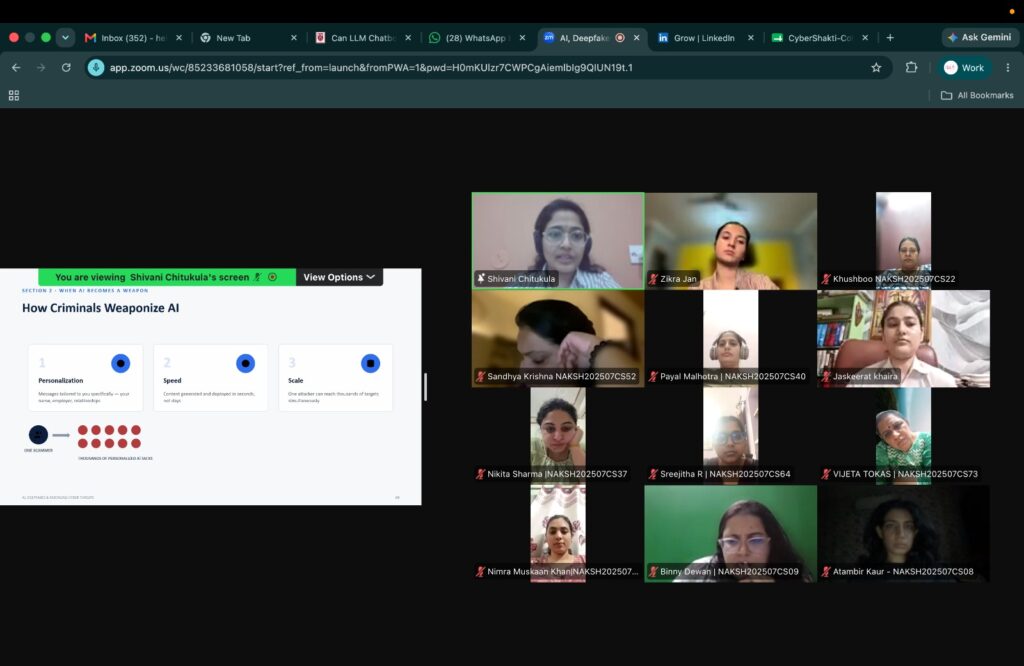
Watch the Full AI Deepfakes Session
The complete session is available on Naksh Foundation’s YouTube channel. You can watch the discussion to learn more about AI deepfakes, emerging cyber threats, and practical ways to stay safe online.
Building Safer Digital Habits in the Age of AI
AI will continue to develop, and new risks may appear along with it. However, awareness can help people make safer choices. By learning how deepfakes and AI scams work, users can better protect themselves online. Ultimately, responsible digital habits can help create a safer online community.
Want to explore more cybersecurity awareness activities? Blogs to discover more campaigns and events, or visit our Naksh Foundation to learn about all the initiatives we undertake.